What Is a Meme Coin and Why It Beats Utility Tokens for Fast Speculative Gains
Need articles like this for your video? They help promote it on YouTube and Google — order them in the Telegram bot @sat_sit_bot. Articles with your video embedded are written and posted by the bot itself — on popular topical sites (no ads). Try it free: 50 articles on us.
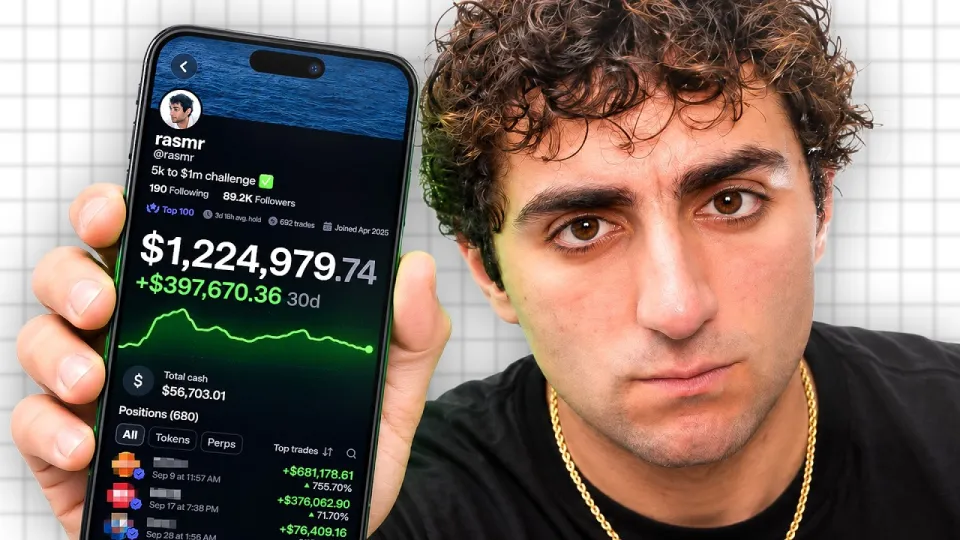
· based on the channel rasmr
A meme coin is a cryptocurrency whose value rests entirely on narrative, community attention and liquidity rather than revenue, a product or cash flow — which is exactly why it can outperform utility tokens over short horizons and also why it can go to zero in hours. For a trader, the honest answer is that a meme coin is not an investment in a business but a bet on attention, and the people who profit treat it as a trade with an entry, a size and an exit. If you want to trade these launches with a low-fee venue and a referral bonus, you can register through FOMO trading platform.
The rasmr breakdown “5 Years of Memecoin Knowledge in 12 Minutes” compresses half a decade of launch-watching into a checklist of narratives, market-cap levels and emotional traps, and the viewer comments underneath show the same mistakes repeating: round-tripping gains, hoping a losing chart recovers, buying tops out of excitement.
What a meme coin actually is and why it trades differently
A meme coin is a token with no intrinsic claim on anything — no equity, no fee share, no roadmap obligation — so its price is set purely by supply, demand and the story around it. That removes the valuation ceiling and floor that utility tokens have, which is why a meme coin can 10x in a day and lose 90% the next.
Three mechanics explain most of the behaviour you see:
- Narrative first. The story — a mascot, an event, a cultural moment, a joke about an upcoming game release — is the product. A token with a strong, instantly legible narrative attracts buyers faster than a technically superior project with no hook.
- Liquidity is the real chart. Thin liquidity means small buys move price violently in both directions; the same order that pumps a low-cap launch will crater it on the way out.
- Launcher identity matters. Knowing who released the token and whether that wallet has a history of dumping tells you more about risk than any indicator. Tokens announced to a tight circle before public launch routinely see early buyers exit into the crowd.
Why market cap, not token price, decides your exit
Market cap is the number that tells you how much money has to enter for the price to double, and therefore where early buyers usually start selling. A token priced at a fraction of a cent can still be a large-cap if the supply is enormous; a “cheap” coin is not a bargain.
Practical way to use it:
- Map the launch market cap and the typical exit zone for similar launches — most early participants begin distributing at recognizable round levels, and the crowd arriving from social media is the exit liquidity.
- Compare fully diluted valuation to the float actually trading; a small float with a huge unlock schedule means the chart you see is not the supply you will face.
- Treat a doubling of market cap as a decision point, not a confirmation to add.
The emotional mistakes that cost the most money
The single most expensive meme coin error is letting emotion set the exit instead of a plan. The pattern is consistent across traders: a position runs up 50–100%, greed says hold for more, the chart reverses, and the whole gain round-trips back to the entry — or below it.
Watch for these four behaviours:
- Round-tripping. Watching an unrealized gain evaporate because selling felt like admitting the move was over.
- Hoping on a loser. Refusing to cut a position that is down, waiting for the chart to “come back”, which turns a small loss into a large one.
- Top-blasting on excitement. Buying after a vertical candle because the chart looked unstoppable — the moment when early buyers are selling to you.
- Oversizing. Using capital that matters for daily life, which guarantees the emotions above will win.
A pre-written plan — entry, position size, first partial exit, invalidation level — is the only reliable defence, because it is made before the adrenaline arrives.
How to research a launch before you buy
Research on a meme coin is quick but specific: identify the narrative, the launcher, the holder distribution and the liquidity lock. Skip any step and you are trading blind.
A workable checklist:
- Narrative: can you explain in one sentence why strangers would buy this today? If not, there is no meme.
- Launcher and early wallets: check whether the deployer and the first buyers are the same small set of addresses that have dumped previous launches.
- Holder concentration: a handful of wallets holding most of the supply can exit into your buy at any moment.
- Liquidity: how much can you sell without moving the price 20%? That number, not the chart, is your real exit size.
- Contract basics: mint authority renounced, no hidden tax, liquidity locked or burned — the minimum hygiene for anything you touch.
Common questions traders ask about meme coins
Most recurring doubts are about timing, sizing and whether a themed launch is worth the risk. A token tied to a big cultural event — a game release, a viral trend — often looks like a sure thing precisely because the narrative is obvious to everyone, which usually means the easy part of the move already happened before you heard about it.
On sizing, the consensus among experienced traders is to start small and scale only with proven process, not with conviction. On timing, the edge is being early to a narrative rather than early to a chart pattern. And on the “insider circle” question: yes, some launches are telegraphed to a connected group before the public, which is exactly why you should assume you are the later buyer and size accordingly.
Useful links
The bottom line on meme coin trading
A meme coin is a narrative trade, and the traders who survive it are the ones who separate the story from the position size. Market cap and liquidity define where you can realistically exit, launcher history defines how much you should risk, and a written plan defines whether a 100% gain becomes money or a screenshot. The rasmr channel is worth following for this kind of compressed, experience-based breakdown — the video condenses five years of launch-watching into a checklist you can apply the same day. If you are going to trade these launches, do it on a venue you control, start with capital you can lose, and register through FOMO so your fees and referral bonus work in your favour from the first trade.
Key takeaways
- A meme coin has no cash flow or product — its price is driven purely by narrative, attention and liquidity, not fundamentals.
- Most memecoin losses come from emotions: round-tripping unrealized 50–100% gains and refusing to cut a losing position.
- Market cap, not price per token, tells you where early buyers usually start selling — low-cap launches move fastest.
- Knowing who launched a token and what story it rides matters more than the chart pattern.
- Small starting capital and pre-planned exits beat conviction holding; a million in unrealized profit is worth nothing until sold.
Source: 5 Years of Memecoin Knowledge in 12 Minutes · Markdown version
Questions & answers
What is the difference between a meme coin and a utility token?
A utility token is priced against a product, fee stream or roadmap, while a meme coin has no cash flow and trades purely on narrative, attention and liquidity. That makes meme coins faster-moving in both directions: bigger short-term upside and a realistic path to zero.
How do I know when to sell a meme coin?
Decide your exit before you buy, using market cap rather than token price as the reference, and take partial profits at planned levels instead of waiting for a round number. Most early buyers distribute at recognizable market-cap zones, so the crowd arriving from social media is usually the exit liquidity.
Why do so many traders lose money on meme coins?
Emotions override the plan: holding for more after a 50–100% gain, refusing to cut a loser while hoping the chart recovers, and buying vertical candles out of excitement. Oversizing makes all three worse, because capital you cannot afford to lose guarantees emotional decisions.
Is a coin tied to a big event like a game release a good buy?
An obvious narrative is usually already priced in by the time it reaches you, and themed launches attract a large crowd of late buyers who become exit liquidity. Check launcher history, holder concentration and liquidity first, and size the position as if you are the last buyer in, not the first.